Monday, December 12, 2022

Cab Francs for the Memories


One way to think about Cabernet Franc and Cabernet Sauvignon is to compare them to Muddy Waters and The Rolling Stones. (Note--if you're a blues fan, ymmv with this analogy.) CF is the genetic daddy of CS (along with Merlot and Carmenere), but isn't as well know among the masses. You could argue CS turned up and popularized the volume on CF, in the same way that Mick and the gang (perhaps, in this case I should say Keith and the gang?) upped the ante on everything. (At least there's no race issues and appropriation concerns when it comes to the grapes.)

So it's good to know someone cares to blow Cab Franc's trumpet, which is what December 4th's Cabernet Franc Day in Paso Robles was all about. This inaugural event featured a seminar on Cab Francs around the world and then, not surprisingly, drove the CF point home with a tasting from 16 producers from Paso Robles. Lori Budd of Dracaena Wines was the instigator of this event, partially because she makes a very fine CF, but we'll get to that.

First there was the seminar, hosted by Kunal and Neeta Mittal (in the middle and right in the above photo) of LXV Wines. (Bet you can guess what one of their favorite varietals is.) To their left was the presenter of the seminar, Wes Hagen, who is as quick with a quoted quip as he is with a reasoned guess at the amount of stem inclusion in a particular pour. In many ways he was a perfect host as his storied career has centered in Santa Barbara on Pinot Noir--as a double outsider he brought refreshing, new insights to all things CF. He even had his own musical metaphor to kick off, calling CS heavy metal and CF jazz. And he also offered this wonderful "theory" of drinking: "I drink beer standing up, wine seated at the table, and spirits between the table and the floor." (He tasted with us pacing, so maybe presentational consumption created its own categories.)


We got to taste along in a global trip through six CF producing regions, kicking off with its classic representation, one from the Loire. This was the 2018 Vignerons de Saumur Rouge "Les Epinats," a lighter style of the grape, with lots of dusty tannins, pepper, and mineral notes.


Wine #2 took us to the right bank in Bordeaux for a 2018 Château Bel Air St. Emilion. This was a bit of a cheat as it's a 50/50 CF/Merlot blend, and it turns out the two bring out fine qualities in the other. Despite its practically slutty color it's an elegant pour with just a hint of brett; Hagen argued that helped age it faster in a way, an "acceptable flaw" at such a slight addition. The wine didn't suffer from any Band-Aid nose, that's for sure.

Wine #3 was my favorite of the international six and a true surprise, as I haven't imbibed much from Hungary, to be honest. But the 2017 Havas & Timár, Franom, Eger Region offered plenty of the varietal characteristic strawberry on the nose and palate, but gave a twist on the typical bell pepper notes by bringing some red bell pepper. (What else from the land of paprika?)
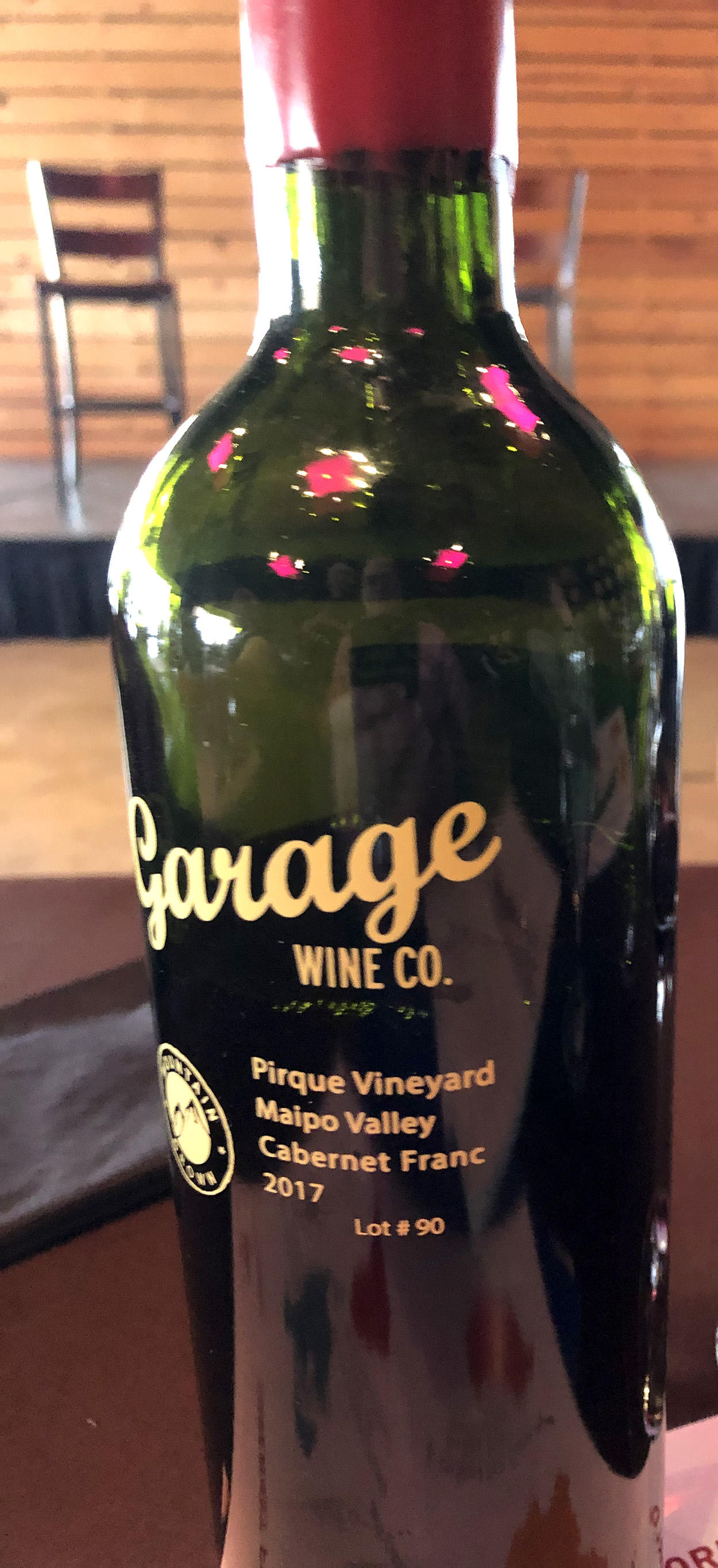
 
 
We moved to the New World with wine #4, a CF from the Garage Wine Co. (yep, the so on-the-nose version of garagiste led to numerous Hagen jokes), Pirque Vineyard, Maipo, Chile. Hagen hailed it as the most varietally typical up to that point (take that, France), discussing what calling something a round wine meant to Germans--not to describe a zaftig wine, but one that told a full, beginning, middle, end story. This Maipo had that narrative flow down, especially bringing the characteristic pyrazines. That hint of green pepper is often (not always) a signature of CF. The Maipo even had a kick of mint to it.
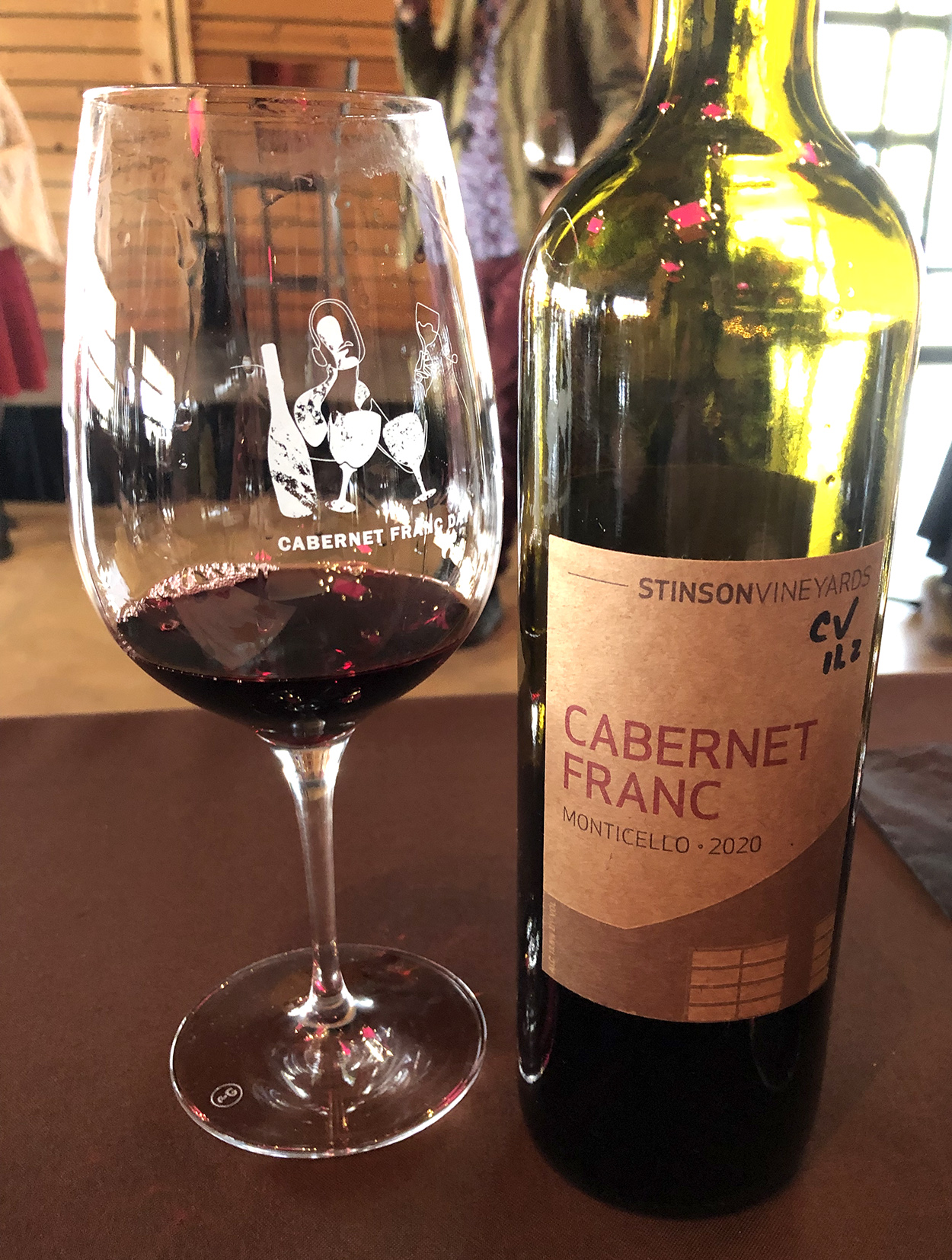

I will do my best not to be a catty Californian about wine #5, from Virginia. You have to hand it to the Stinson Family for making a quaffable CF 10 miles from Monticello, where Jefferson struck out trying to make wine from any grape centuries prior. So they've got that on one of the Founding Fathers. This 2020 had less of the usual fruit than the others, so they made up for that with other notes, like whole berry fermentation (if destemmed) and probably more oak.


We closed with Napa, and the biggest of the wines, because, as I wrote, Napa. The 2016 Crocker and Star is officially a "Red Wine of Cabernet Franc" as it's 68% CF, 23% CS, 7% Petit Verdot, and 2% Malbec. This one was a teeth-stainer, dark dark red and by far the oakiest of all the pours. Definitely for a certain taste, but it pulled that velvet hammer pummeling successfully.


All in all, a delightful trip around the globe in a series of CF glasses, such as the one Hagen contemplates above. One of his closing comments certainly left us all with something to consider; he said, "Wine is the only time machine that works...it's quantum." And getting to go to Hungary five years ago while sitting on my ass in Paso certainly proved that.

Between the global tasting and the Paso tasting there was a quick Paso panel that featured Stasi Seay, Director of Vineyards at Hope Family Wines, Michael Mooney, President/Winemaker at Chateau Margene, and Steve Peck, Director of Winegrowing at J. Lohr. Hagen, as moderator, kept it quick and the panelists kept it clever. Mooney was sure to point out that "Paso is not Paso--it has 11 sub AVAs reflecting differences from altitude, proximity to the ocean, soil composition." And to set us up for the Paso tasting, Peck admitted, "At J Lohr, about our best wine in the cellar is a Cab Franc, and about our worst wine in the cellar is a Cab Franc." So volatility can be expected.

Not that what anyone was pouring from the Grand Tasting was anything less than good--actually 8 of the 16 wines poured were already sold out (thanks for sharing, kind wineries!). Perhaps it comes down to CF being an easier grape to grow than something fussy like Pinot Noir; perhaps it's because a winemaker has to love the grape to want to make it, given consumers aren't busting down the door to buy it (heck, there's slightly more CA acreage of Petit Verdot than CF)(sure that's mostly going into blends, but still).


That said, the standout for me was Union Sacré, a small producer that generally focuses on Alsatian wines that's based in Tin City. Their website wonderfully announces: "These are not wines of privilege and power, these are wines made from a lifetime of labor for the untelevised tables that unite the very heart of the world." So, consider their CF as literate. Bright and balanced, plenty of fruit but also violets, spice, just enough earth to keep things grounded. A gorgeous effort.


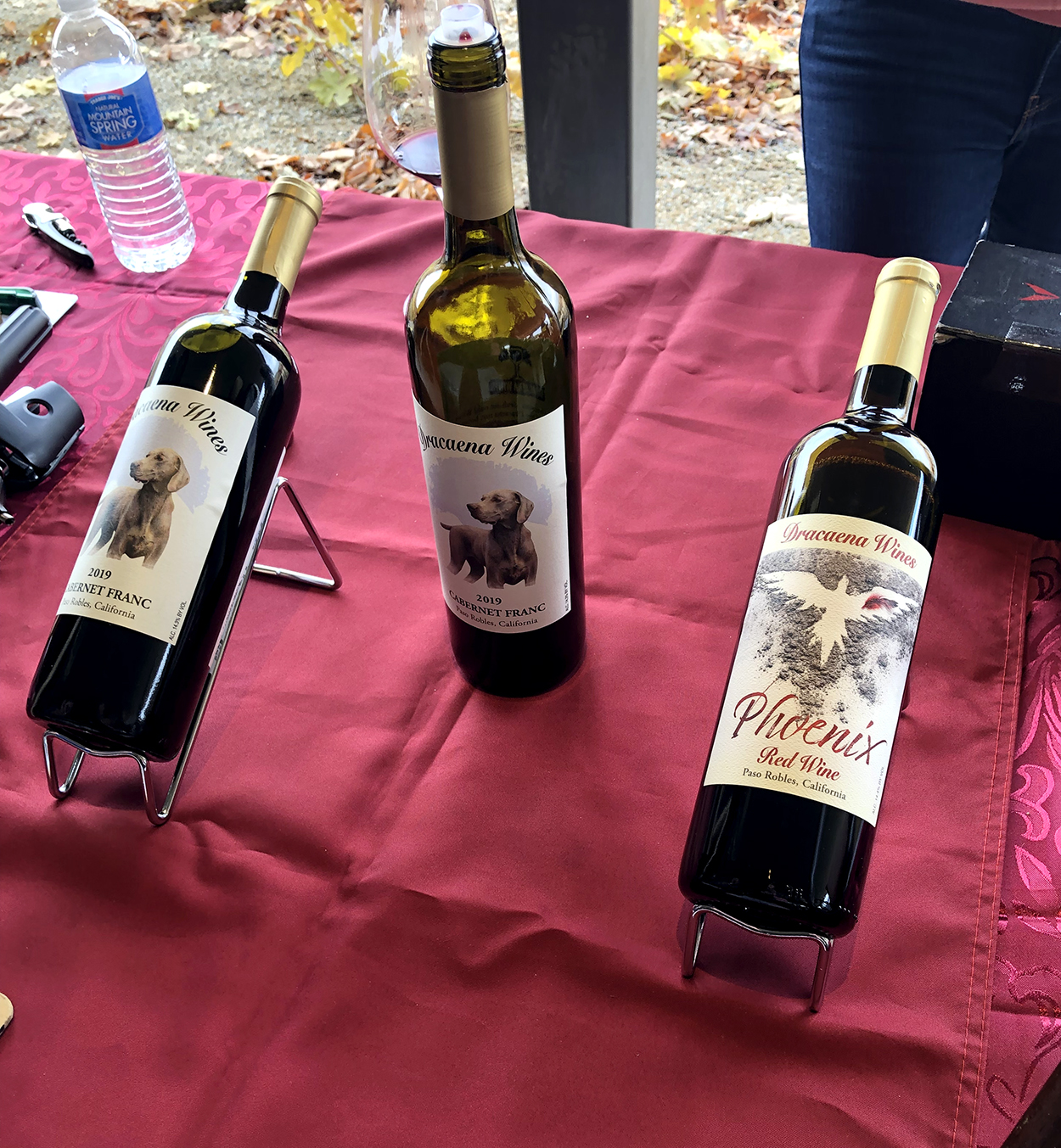
And I promised you I'd get back to Dracaena. (BTW, there's science and stars and dragons and dogs in the name--go to their website to get the full story.) Their 2019 Classic CF (they do a reserve, too, but that's long gone) gets a bit more backbone with 8% Petit Verdot, and it all comes together in wine delivering dark cherry and plum with some cocoa and a rich mouthfeel--particularly good on a bit of a blustery December day. Also notable is their NV Phoenix that blends 77% Cabernet Franc, 18% Merlot, and 5% Petit Verdot as a way to deal with the smoke taint in their vineyards after all of the fires in 2020. The wine does have a hint of smoke--but as a mezcal and Islay lover, that's kind of fun in a wine, now and again. So if you want something a bit unusual....

And I'd be remiss not to discuss the great food pairings put together by Neeta Mittal and chef Charlie Paladin of Cass Winery (where the event was held). The grazing bar offered all sorts of spreadable, from a smoky baba ghanoush to a hummus of some depth thanks to fried garbanzos, but it was the passed apps that really starred, from South Indian lentil cakes to a dusk breast seared rare with a cherry demi-glacé. Every bite proved what a versatile wine pair Cab Franc can be.

There were lots more fine wines, some of which I'll get to whenever I get to part two of the story covering a special media and friends celebration dinner the night prior. But in the meantime, here's the view for the grand tasting, wine country winter in all its ragged glory.


Wednesday, December 7, 2022

A Review of "The Last Days of Roger Federer"


Some lines from Robert Christgau about Lloyd Cole have always stuck with me: “So what if he can’t stop talking about books and movies and gathers his material on day trips from his walkup flat? Does that make him so different from you?” I was reminded of those lines while reading Geoff Dyer’s The Last Days of Roger Federer, as it’s a book replete with ruminations about books, movies, art, music, drugs, and, yes, tennis, thematically tied by the biggest baddie of all—death. Or, as Dyer puts it, “quitting,” but that simple word can mean so many things. 

Now, if my first sentence, dropping in both a rock critic who himself is famous for his often cryptic, ever epigrammatic reviews and a semi-obscure musician (his best known tune, “Are You Ready to be Heartbroken?” might be the most famous because Camera Obscura wrote the answer song, “Lloyd, I’m Ready to be Heartbroken”) was off-putting, this Dyer book might not be for you. For that’s often his method, allusive to the point it’s easy to feel you need an auxiliary reading list to school yourself to read The Last Days and be fully rewarded. The odds are good you won’t have enough days to accomplish your assignment.

Care to read the rest then do so at the California Review of Books.

Tuesday, November 22, 2022

A Review of "Orwell's Roses"


Think of Rebecca Solnit’s Orwell’s Roses as a whydunit. Beyond admitting how much he influenced her as a writer/journalist/activist, Solnit was also moved to learn of the rose bushes Orwell planted by his countryside English cottage in Wallington. Planting fruit trees made a certain practical sense, but roses fed no one. 

 That would be the too facile conclusion one might have before reading Solnit’s lovely, hopeful book. Despite relatively harrowing, clear-eyed passages about our current climate crisis and about the vicious Stalin-led starving of Ukraine in the 1930s, Solnit also succeeds at what she claims Orwell accomplishes. Both calm yet crusading writers help us witness “imperfect and unidealized beauty.” That is, see the world we live in.

Care to read the rest then do so at the California Review of Books.

Review also posted at the Santa Barbara Independent on November 25, 2025.

Tuesday, November 8, 2022

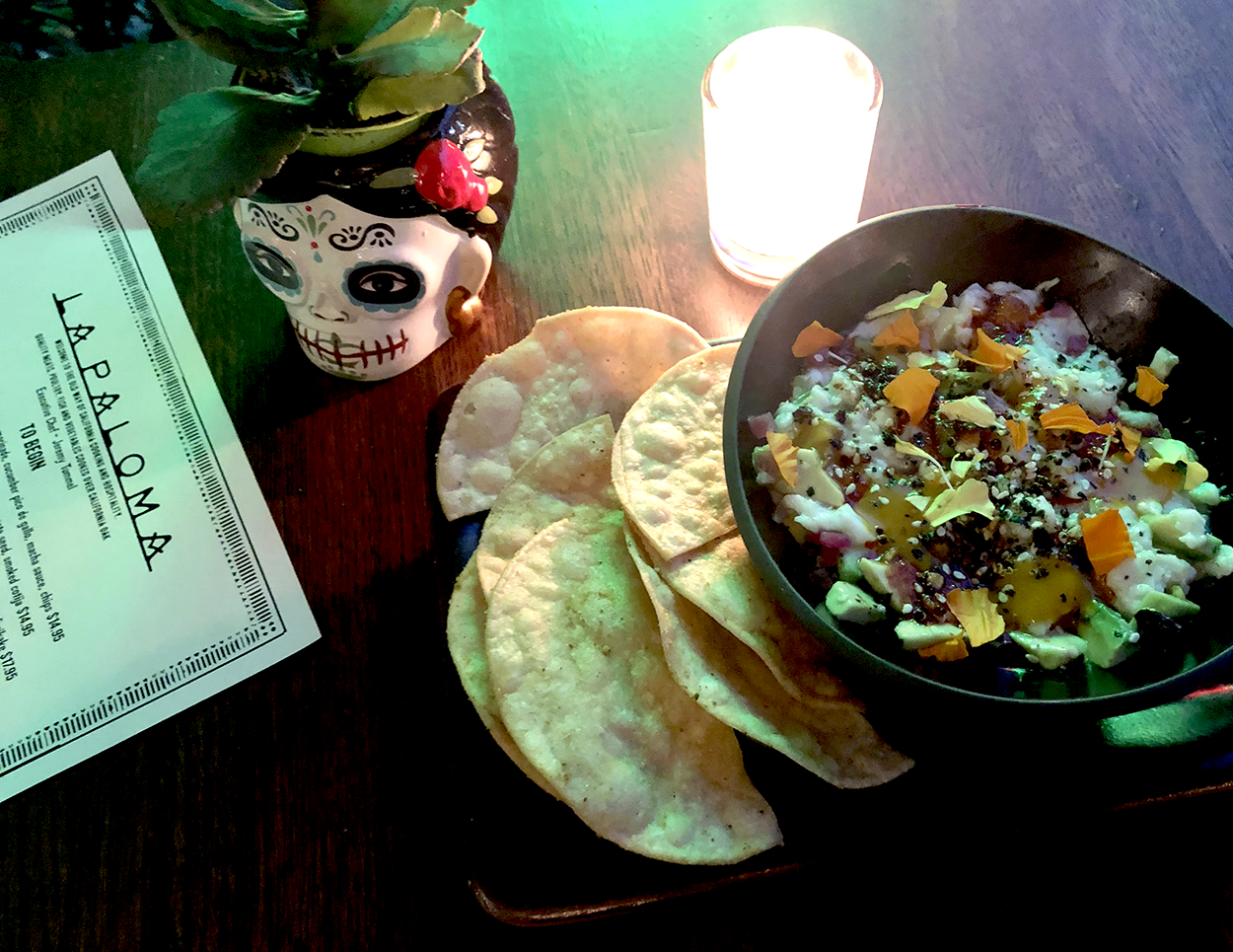
Delicious Dia de los Muertos at La Paloma


(photo by Chryss Yost)

In some ways who better than La Paloma Cafe & Restaurant to hold a Dia de los Muertos celebration given the spot is a resurrection of a previous restaurant (the 1940-1983, pre-Paradise Cafe, La Paloma). Given November 1st is considered the day the veil between the living and the dead is most diaphanous, sure, let's break out the sugar skulls, paint our faces, set up an altar to those we care to honor, and, of course, do some serious eating and drinking.

While I'm pretty sure spirits don't gain weight, it's pretty definite we did that evening, feasting to the memories of those we loved and lost. Things kicked off with the cutest of mini-cocktails, a Calaverita in a skull shot glass, but its size belied its kick, what with both tequila, mezcal, a hibiscus-cinnamon-ginger piloncillo syrup, and lime and ginger beer. Adorned with flowers and a tajin rim, the only thing wrong with it was you wanted to imbibe much more.

I'm going to avoid a complete rundown of each dish, but La Paloma seems to have completely found its stride at this point, even on a special evening with lots of customers (particularly for a Tuesday). Indeed, some friends got seated outside on the uncovered back patio, and when a shower let lose (see, spirits had to be involved to cause rain in Santa Barbara), they were quickly ushered inside and received a gratis dessert to comfort their slightly wet selves. Just one way the service was shining along with the food.

I'd be remiss not to mention the music, by a combo whose name I missed (sorry). But they kept things buoyant and bubbly with classics ranging from "Besame Mucho" to "La Bamba," adding to the festive feel.

Still, it was the food that made the evening truly special. An appetizer crudo sang of the sea; the crispy Brussels sprouts brought smoke from the red oak grill and earthy funk from a syrah-porcini mushroom reduction. And to single out one main, the evening featured a special Chili Colorado, beef tender and braised with such depth of flavor in a sauce no doubt made with numerous kinds of chiles offering their orchestra of heat notes. Wow. Wrapped in tensile homemade tortillas, the dish was a kind of simple heaven.

Matched by a dessert, a Mexican salted chocolate tart that's as good a chocolate dessert as I've had. Too often such plates get either too much or boring five-forkfuls in, but this had such a perfect balance of sweet, heat, cocoa, caramel, and salt you keep going back for more. It could tempt the dead.


Sunday, November 6, 2022

Meet Loquita’s New Chef Sergei Simonov


It’s only been about six months since Sergei Simonov started leading the Loquita kitchen as executive chef, but it’s felt like 10 years already. “This summer, we’ve done the biggest business since the restaurant opened,” said Simonov, who tells us more about his circular culinary journey below. 

 Mentored by Jason Paluska: Simonov moved from the Bay Area to attend culinary school at Santa Barbara City College in 2011, then landed a sous chef job at The Lark under Chef Jason Paluska. “I still call him about things like how to cost out a dish,” said Simonov of his mentor. “He taught me A to Z, not just the flavor profile and palate.” He still borrows from Paluska’s plating style and love of pickled elements.

Want to read the rest then do at the Independent's site.

AR Social Club's Crazy, Boozy Zoom Room


It's not every day I've been convinced to add maple syrup to what's billed a margarita, but not only do you only live once, you might only once partake in the AR Social Club's Halloween spectacular that truly helped put the spirits into the spooky season. But, being a boring straight white guy, I'd never taken part in a kiki before, let alone one Zoomed into my house from hipster Brooklyn. By now my guess is you're confused, so let's take s step back to set the scene via informative Q&A.

Q: What's an AR Social Club?
A: Let's hope you've got those last two words--I can't explain everything to you. But the AR stands for AskRonna, an advice podcast hosted by Ronna Glickman (@ronnaglickman) & Bryan Safi (@bryansafi). Not only are they IG account-forward, they are more or less characters created for humorous now consumption--Glickman is a long time persona for Jessica Chaffin, while Safi went by Homosensual on his podcast Attitudes! It's all very fabulous and very New Yawk. 

You actually get a monthly box of booze and other goodies (for Halloween those included plastic fangs with stage blood, two full-sized Snickers, and two full bottles of liquor...more on those in a bit). Reminded me of the moment when Major Kong in Dr. Strangelove opened the survival kit and concluded, "A fella could have a pretty good weekend in Vegas with all that stuff."

Q: Do these subtly famous funny folks know about booze?
A: They don't have to! That's because Conor McKee from Fiasco! Wine & Spirits puts together the packages that feature artisan liquor and then comes up with each episode's cocktail. He really knows what he's doing, and the other people in the shop even get you the Zoom link if somehow you never got yours. So, A+ for Fiasco!

Q: You get full 750ml bottles? And the stuff is good?
A: Hey, that's two questions in one ask. Yep, two full bottles. (And before you ask, a single kiki+box is $125, but it's $100 if you sign up for at least three.) I can only vouch for this box, but the two products were tasty and unusual. DE-NADA provided a bottle of their tequila blanco that's additive free and bright and clean as a mercury beam. The blood orange aperitif came from Elsewhere--that's actually it's name--created by bespoke R&D Matchbook Distilling out on the non-snooty end of Long Island. Made with NY organic corn, CA organic blood oranges--8000 pounds of them, cut by hand, a party everyone wants to be invited to next time--and then enough roots/botanical to practically make this an amaro: quassia, pink peppercorns, cloud forest cardamom, gentian, Indian cinnamon bark & wild cherry bark. It's a bit too much of a kick as a sipper, but it gives a cocktail that good deep depth, if you know what I mean.

Q: You actually got info during this event?
A: Yes, if highly interrupted and played for corny comedy gold. For instance, when Paul Monahan from Matchbook was talking about the north fork of Long Island where they're located and said it had less fancy developers than the folks in the Hamptons, Ronna cut in, "Those developers were called Pilgrims, dear." And, of course, the two college buddies who developed DE-NADA got lots of gruff for going to Tulane, not that they didn't run with it. One of them joked he majored in Liver Destruction. But, yes, people from both liquors were on the Zoom.

Q: Was it worth an hour?
A: If you like madcap and manic, sure. It's clear there's an in-group learning curve trying to suss out the loving/sparring duality that is the Ronna and Bryan relationship, and then other Zoom-ers are allowed to pop in like the cherished annoying neighbor on a sitcom, along as they are also a somebody--this episode that was comedian Naomi Ekperigin. Otherwise we were advised to keep our mics off, which really just makes sense or a Zoom with five screens of participants can become chaos. not that people didn't fire off their opinions in the chat that never let up. 

Q: Is that a butt on the blood orange aperitif label?
A: Why, yes. There might have been a crack or two about that.

Q: Are you sorry?
A: Do you know me by now? Never apologize for puns or scoring two full bottles of good booze.


Wednesday, November 2, 2022

Santa Barbara Wine Auction Grows into Weekend Affair


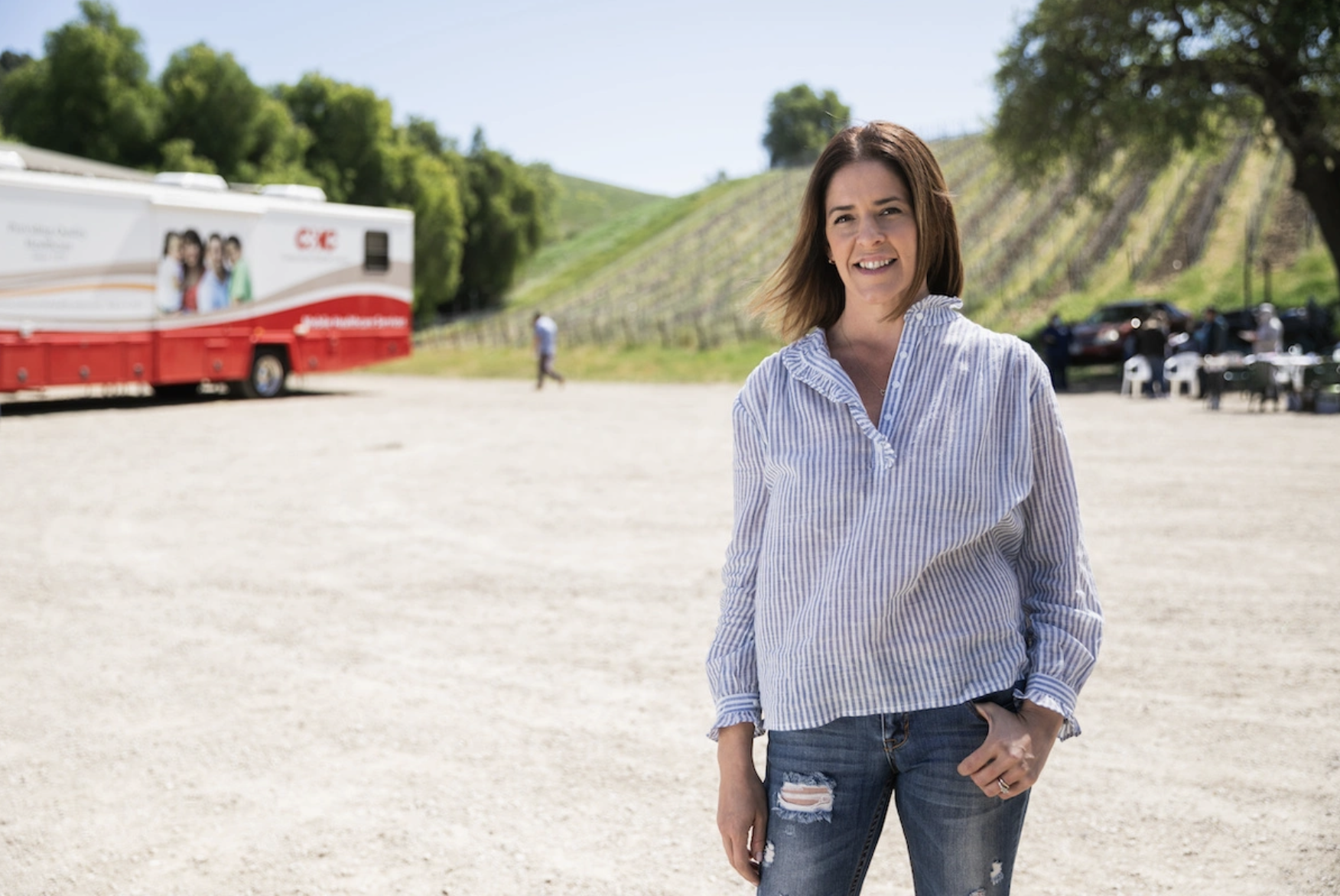
Though Direct Relief might be the fifth-largest charity in the United States (according to Forbes Magazine), that doesn’t mean the Goleta-based nonprofit never endured lean times. In speaking about next weekend’s Santa Barbara Wine Auction, Direct Relief’s vice president Heather Bennett explained, “[Winemakers] Jim Clendenen and Frank Ostini started this connection between the Santa Barbara Vintners Foundation and what was then Direct Relief International, and they helped us pay the bills when we really needed the support.” 

That was way back in 2000, the year of the first Wine Auction. While the Vintners Foundation’s biennial gala continues to support Direct Relief’s internationally minded efforts two decades later, it now also directly helps the region’s farmworker community by benefiting Community Health Centers (CHC) of the Central Coast.

Care to read the rest then do so at the Independent's site.